How to Create a Website for a Construction Company
The short answer
To make a construction website, decide which customers and projects you want, then build seven core pages: home, about, services, projects, accreditations, areas served and contact. Add detailed project case studies, genuine trust signals and a clear way to enquire. Make it mobile-friendly, because Google indexes the mobile version of a site (source: Google Search Central), and plan the SEO structure from the start.
How to make a construction website that looks professional, builds trust and turns visitors into enquiries, with a UK cost table and a pre-launch checklist.
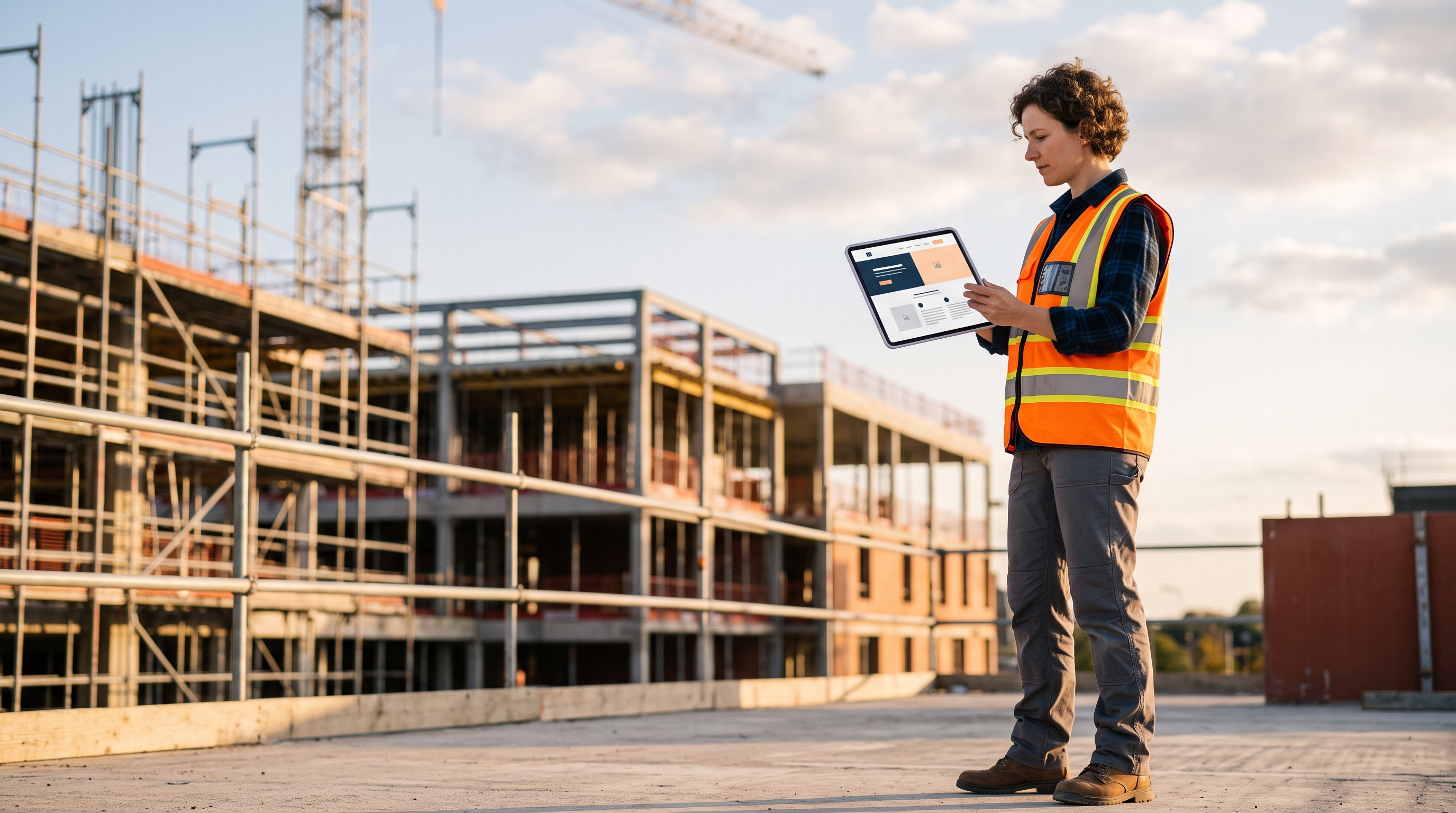
A professional construction company website should do more than show your logo, services and a few project photographs. It should quickly explain what your business does, demonstrate the quality of your work, build trust and make it easy for potential clients to get in touch.
Whether you are a builder, main contractor or specialist construction company, good construction web design combines professional presentation with clear information, strong project content and a structure that can be found through Google.
This guide explains how to make a construction website step by step, the essential elements it should include, what it typically costs in the UK, and the checks to run before it goes live.
1. What should a construction website achieve?
For most construction companies, the main objective of a website is to generate enquiries from the right potential clients, so decide what you want the website to accomplish before thinking about colours, fonts or layouts.
Those enquiries might come from homeowners looking for a builder, developers searching for a contractor or businesses looking for commercial construction services.
Your website should therefore be built around the customers and projects you want to attract.
Consider:
- What services do you offer?
- Where do you work?
- Who are your ideal customers?
- What type of projects do you want more of?
The answers should influence your website structure, content and calls to action.
2. What pages does a construction company website need?
A construction company website does not need hundreds of pages, but every important part of your business should have a clear place within the site.
A typical structure could include:
Home → About → Services → Projects → Accreditations → Areas Served → Contact
Individual services should have their own pages when they are important to the business. For example, a building company offering extensions, renovations and loft conversions could create separate pages for each service.
Separate service pages give visitors more information while also creating dedicated opportunities to target relevant searches.
Project pages are equally important. Rather than displaying all your work in one gallery, create detailed case studies for significant projects. Explain what the project involved, where it was completed and what your company delivered, alongside high-quality photography.
3. What should a construction company homepage say?
The homepage should immediately tell visitors what you do, where you operate and why they should consider your company.
Avoid vague headlines such as:
"Building a better future together."
Instead, be specific:
Commercial construction and refurbishment across Manchester
A specific headline immediately communicates the company's service and location.
Your homepage should then introduce your main services, showcase selected projects, provide trust signals such as genuine testimonials or accreditations and give visitors an obvious way to make contact.
Good construction web design is not about putting as much information as possible on the homepage. It is about presenting the most important information in the right order.
4. How should you showcase construction projects on your website?
Your completed work is one of the strongest forms of evidence you have, so show it as project case studies rather than a simple photo gallery.
Potential customers want to see what you have actually built, renovated or delivered before deciding whether to contact you.
For each important project, explain:
- What type of project it was
- Where it was completed
- What work you carried out
- Any relevant challenges
- The completed result
For example, instead of simply showing ten photographs from a house renovation, create a page describing the renovation, the location, the scope of work and the outcome.
Project case studies can build credibility while also providing useful content for search engines.
5. How do you build trust on a construction website?
You build trust on a construction website by showing evidence, not claims. Construction projects can involve significant budgets, so visitors need reasons to trust your company.
Your construction company website should make relevant evidence easy to find. This can include testimonials, accreditations, certifications, previous projects, team information and details about your experience.
The most useful trust signals depend on your business.
A residential builder might focus heavily on customer reviews and completed projects, while a commercial contractor may need to demonstrate relevant project experience, accreditations, sectors served and technical capabilities.
The important point is to show evidence rather than rely entirely on claims.
"Quality workmanship" is easy for any company to say. A portfolio of completed projects provides something much more convincing.
6. Why does a construction website need to be mobile-friendly?
A construction website needs to be mobile-friendly because a large proportion of your potential customers will visit it from a mobile device, and Google uses the mobile version of a site's content for indexing and ranking (known as mobile-first indexing).
Your construction website should therefore be designed for smaller screens rather than simply being a desktop website that has been scaled down.
Navigation should be straightforward, text should be easy to read and important actions such as calling the company or requesting a quote should be simple to access.
Large project photographs should also be properly optimised so that they do not unnecessarily slow down the website. Google's Core Web Vitals guidance says the main content of a page should load within 2.5 seconds.
A professional website that is difficult to use on a phone can lose enquiries before a visitor ever reaches the contact page.
7. How do you plan a construction website for SEO?
SEO should be considered when the website is planned, not added as an afterthought.
The structure should make it clear to search engines what services you provide and where you operate.
For example, a construction company offering commercial refurbishment in Birmingham could have dedicated pages for its key services, supported by relevant project case studies and location information.
Each important page should focus on a clear subject rather than trying to rank for every possible construction-related keyword.
Use natural language that reflects how your customers search. Terms such as construction website design, construction web design, construction company website and website for construction company describe the website topic directly, while your service pages should target the actual construction services you provide.
The goal is not to repeat keywords. It is to create a website with a clear and logical relationship between your company, services, projects and locations. The guide to local SEO for builders covers how that structure helps a firm appear in local searches.
8. How do you make it easy for visitors to enquire?
A website can look excellent and still fail commercially if visitors cannot work out what to do next, so every important page should provide a clear next step.
Depending on your business, this could be:
- Request a quote
- Discuss your project
- Call us
- Arrange a consultation
The CTA should be relevant to the page. Someone reading about a specific service should not have to return to the homepage to find out how to make an enquiry.
Keep contact forms simple and make your telephone number easy to find, particularly on mobile.
How much does it cost to make a construction website in the UK?
A construction website in the UK typically costs from about £22 a month on a DIY builder such as Wix or Squarespace, to about £4,000–£5,000 with a freelancer, or £5,000–£25,000 with an agency. These are typical UK ranges, not guarantees, and the right choice depends on how much time you have to build and maintain the site yourself.
| Route | Typical UK cost | Typical time to launch | Who does the work |
|---|---|---|---|
| DIY website builder (Wix, Squarespace) | About £22 a month, adding up over the years | Depends on your own time | You |
| UK freelancer | About £4,000–£5,000 (billed £50–£120 an hour) | Varies | The freelancer |
| UK agency | £5,000–£25,000 | 8–12 weeks | The agency |
| ConstructionWebDesign.uk Website package | £1,000 one-off fixed price, no subscription | Live in 7 days from the discovery call | ConstructionWebDesign.uk |
The cost guide on how much a construction website should cost breaks these ranges down further, and the comparison of WordPress vs a custom construction website covers the platform choice.
What UK rules and accreditations should a construction website cover?
A UK construction website should show the legal company details the law requires, explain how it uses enquiry data, and display only the accreditations the business currently holds.
- Company details: a limited company must show its registered number, registered office address, where it is registered (England and Wales, Scotland or Northern Ireland) and the fact that it is a limited company on its website (source: GOV.UK). The footer is the usual place.
- Privacy information: a contact form collects personal data, so UK GDPR requires privacy information at the point you collect it, usually a short privacy notice linked from the form (source: ICO).
- Cookies: under the Privacy and Electronic Communications Regulations (PECR), non-essential cookies such as analytics or advertising cookies need the visitor's consent before they are set (source: ICO).
- Reviews: since 6 April 2025, the Digital Markets, Competition and Consumers Act 2024 bans fake reviews and concealed incentivised reviews, so only publish genuine testimonials (source: Competition and Markets Authority).
- Trade registrations: show the logos and registration numbers you actually hold, such as Gas Safe Register (the official register of gas engineers, which customers can check online), NICEIC or NAPIT for electricians, NFRC or CompetentRoofer for roofers, FMB, TrustMark, CHAS and Constructionline.
Commercial clients and main contractors often check accreditations before inviting a firm to tender, so put them on an Accreditations page as well as in the footer.
What should you check before a construction website goes live?
A construction website is ready to go live when every item in the checklist below is in place. The same list works as a quick review of an existing site.
| Check | What good looks like |
|---|---|
| Homepage headline | Says what you do and where, such as "Commercial construction and refurbishment across Manchester" |
| Service pages | One page for each important service |
| Project case studies | Type, location, scope of work, challenges and result for each significant project |
| Areas served | Towns and regions you genuinely cover, with real local content |
| Trust evidence | Genuine testimonials, current accreditations and team information |
| Calls to action | A relevant next step on every important page |
| Phone number | Easy to find and tap-to-call on mobile |
| Mobile and speed | Easy to use on a phone, images optimised, main content loading within 2.5 seconds |
| Legal details | Company number, registered office, privacy notice and cookie consent |
| Google Business Profile | Same business name, phone number and website address as the site |
Decision rule: if a visitor on a phone cannot tell what you do, where you work and how to contact you within the first screen of the homepage, fix that before adding anything else.
How do you create a construction website that works for your business?
Creating a successful construction company website is about more than choosing a professional design. The website needs to communicate your services clearly, demonstrate your experience, establish trust and turn visitors into enquiries.
Start with your customers and the projects you want to attract. Build clear service and project pages around those objectives, make the website easy to use on mobile and structure the content so that both visitors and search engines can understand what your company does.
With the right construction website design, your website becomes more than an online brochure. It becomes a practical sales and marketing channel for your construction business.
How ConstructionWebDesign.uk can help
ConstructionWebDesign.uk is a UK web design agency that only builds websites for construction companies and trades. The Website package is £1,000, a one-off fixed price with no subscription, including custom domain and hosting setup, service pages, mobile-first design and on-page local SEO. The Website + Brand package is £1,399 and adds a logo and visual identity. Sites go live in 7 days from the discovery call, and the client owns the website. Read more about construction web design or book a free 30-minute call.
Frequently asked questions
How long does it take to make a construction website?
Making a construction website typically takes 8–12 weeks with a UK agency, while a DIY site depends on how much of your own time you can give it. ConstructionWebDesign.uk builds construction websites live in 7 days from the discovery call. The biggest delay is usually content, so gather project photos, service descriptions and accreditation details before you start.
How much does a construction website cost in the UK?
A construction website in the UK typically costs about £22 a month on Wix or Squarespace, about £4,000–£5,000 with a freelancer, or £5,000–£25,000 with an agency. These are typical UK ranges, not guarantees. ConstructionWebDesign.uk charges £1,000 as a one-off fixed price with no subscription, and the client owns the website.
What pages should a construction company website have?
A construction company website should have a homepage, an about page, a page for each important service, project case studies, an accreditations page, an areas served page and a contact page. Separate service pages give visitors more information and create dedicated opportunities to target relevant searches, while project case studies show the quality of your work.
Can I make a construction website myself?
You can make a construction website yourself with a website builder such as Wix or Squarespace, which typically costs about £22 a month. The trade-off is time: you write the pages, prepare the photos, set up the SEO and keep everything updated. A DIY site works best for a small firm with time to spare and a simple list of services.
Does a construction website need SEO from the start?
A construction website needs SEO from the start, because the page structure decides what search engines understand about your services and locations. Planning dedicated service pages, project case studies and areas served before the build is far easier than restructuring a finished site. No one can guarantee a top ranking on Google, but a clear structure gives every page a fair chance.
Sources
- Google Search Central: Mobile-first indexing best practices
- web.dev: Web Vitals
- Google Search Central: Do you need an SEO?
- GOV.UK: Running a limited company, signs, stationery and promotional material
- ICO: Right to be informed
- ICO: Cookies and similar technologies
- Competition and Markets Authority: Fake reviews (CMA208)
- HSE: Check an engineer, are they Gas Safe registered?
- NICEIC, NAPIT, NFRC, FMB, TrustMark, CHAS and Constructionline
Want a website that brings in work like this?
ConstructionWebDesign.uk builds construction websites for a fixed £1,000, live in 7 days. Book a free 30-minute call to talk through your website.